


Online, nobody can pick your product up. They cannot feel the weight of the jar, check the length of the cable or ask the person behind the counter whether it fits a six-month-old. The product page has to do all of that, at 11 at night, on a phone, while three competitor tabs stay open. Most e-commerce problems that look like traffic problems are really information problems.
We help e-commerce and D2C brands build the parts of online selling that shoppers actually touch: product information, catalogue and photography standards, the path from an offer to a completed checkout, and the listings on marketplaces alongside your own store. We work with consumer brands in beauty, food and beverage, fashion, electronics and baby and family products, and with established retailers whose catalogue has grown faster than its rules.
Product information that answers the next question
A shopper on a product page is running through a checklist in their head. Will it fit? Will it work with what I have? What exactly is in the box? How is this one different from the cheaper one next to it? If the page does not answer, they leave to find out somewhere else, and often buy there.
We write product information in the order shoppers ask, not the order the factory supplied it. That means:
- Titles that name the product, the key variant and the size in a consistent pattern, so search results and filters work.
- Structured attributes (dimensions, materials, compatibility, age range, ingredients) filled in completely, because filters and marketplace search depend on them.
- Descriptions that lead with what the product does for the shopper, then the detail for those who want it.
- Comparison help where a range has close siblings, so people choose rather than hesitate.
Mandatory information such as ingredients, warnings or certifications is presented clearly from content your regulatory or quality team supplies and approves. We do not provide product registration or compliance sign-off.
Catalogue and photography standards
A catalogue of fifty products photographed by four different people over three years looks like a market stall. The fix is a standard, written down and used every time a new product is added. We create the catalogue rulebook: naming conventions, attribute requirements, copy length, tone, and the checks a product must pass before it is published.
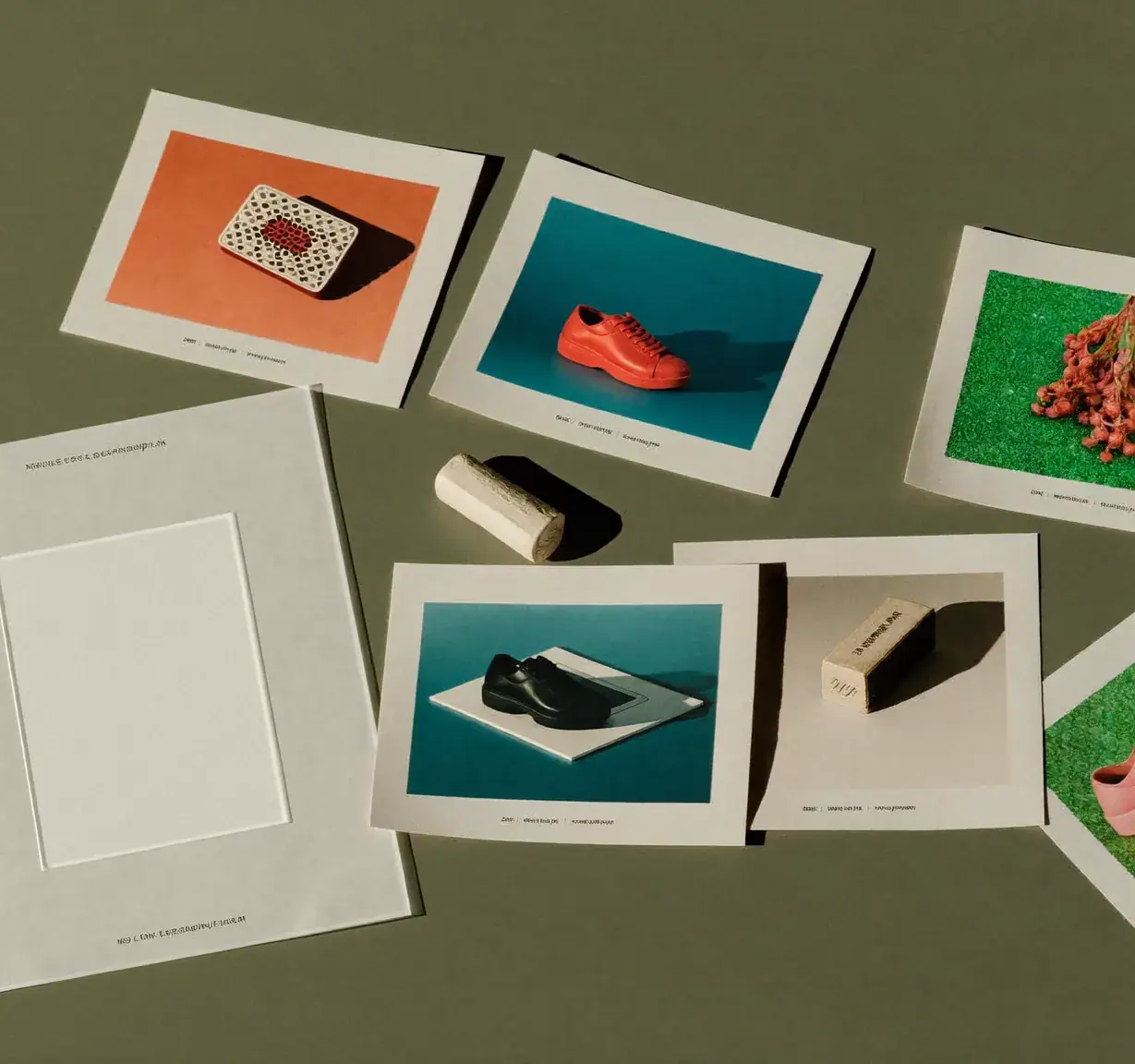
Photography gets the same treatment. A shot list for every product type (front, back, scale, detail, in use, in the box), fixed angles, a background and lighting reference, crop rules for every platform and file naming that your team can follow. Consistent images let a shopper compare products at a glance and make a range read as one brand in a search grid.
Our Studio can produce AI product photography and AI talent for lifestyle and in-use images where a physical shoot is not practical. AI images are built from your real product references, checked for accuracy against the physical item. AI talent is always labelled as AI, and AI product imagery is disclosed wherever your platform or market requires it. Hero product shots that show what the shopper will receive should always match the real product exactly.
From offer to checkout: keeping the promise the ad made
An advert promises something specific: a bundle, a free gift, a new shade, a lower price on the second item. Then the click lands on a homepage, or a product page where the offer is missing, or a checkout where the discount only appears after the shopper has entered an address. Every one of those gaps loses people who had already decided to buy.
- Message match: the landing page repeats the offer in the same words and images as the advert.
- Offer clarity: what the shopper gets, what it costs and any conditions, stated before they have to look for them.
- Fewer steps: guest checkout, sensible field order, delivery cost and timing shown early.
- Reassurance where doubt appears: returns, payment options and delivery information placed beside the button, not hidden in the footer.
We review the full path from the advert to the order confirmation, find the steps where people drop away, and redesign them with our website team. Where media is part of the problem, our media planning team aligns the offers being bought with the pages they lead to.
Is an offer creating interest but losing shoppers after the click?
Send us the linkMarketplaces and your own site: two different jobs
On a marketplace, your product is a small thumbnail among dozens of competitors, and the shopper came for the category, not for you. On your own site, the shopper already knows your name and wants a reason to buy direct. Treating both with the same content wastes the strengths of each.
Marketplace listings need image sets that read at thumbnail size, titles built for the platform’s search, and attributes completed to the platform’s rules. Your own store can tell the brand story, show the full range, offer bundles and subscriptions, and collect the customer relationship you need for retention and lifecycle marketing. We design both from one product information source, so a specification changed in one place does not contradict itself in another.
We create the content and design. Your team or your operations partner manages stock, pricing, fulfilment and seller account administration.
When the catalogue outgrows its rules
Catalogues rarely break all at once. A new supplier sends specifications in a different format, a seasonal range is rushed live without its attributes, an intern writes forty descriptions in a different tone. A year later, filters return odd results, marketplace listings are suppressed for missing fields and the customer service team spends its day answering questions the product page should have answered.
We fix this as an operating problem as well as a writing problem. That means templates for each product type, a single source of product information that feeds the site and the marketplaces, a simple review queue so nothing goes live incomplete, and a short checklist your team uses for every new product: required information present, missing details flagged, images to standard, ready to publish. Our content and editorial team can run the queue with you until the routine is in place.
Building a D2C brand foundation early
Early-stage D2C brands often build the identity, the catalogue and the advertising separately, then spend the next year making them agree. It is cheaper to build them together: an identity that works at thumbnail size, packaging that photographs well and survives a courier, product information written once to a standard, and a first acquisition campaign that lands on pages built for it.
None of this needs to be elaborate on day one. A clear rulebook for twenty products is worth more than a beautiful site with inconsistent listings, and it scales when the range grows to two hundred.
How we measure e-commerce work
We look at each step separately: how many people reach a product page, add to basket, start checkout and complete it, by device and by traffic source. Search visibility for product and category pages, marketplace ranking for key terms, and return reasons all tell you whether the information was right. Visits and sales are kept apart in reporting, because a page can attract attention without selling anything. Our analytics team can set up tracking where it is missing, and our approach is explained in how we measure.
The case notes below come from our team’s experience in earlier in-house and programme roles, across apparel and electronics retail and an early-stage baby products business. They show how product information, identity and campaign destinations support a purchase decision.
Often paired with this work: marketplace management and performance marketing.