


Nobody buys a sofa on impulse, and yet your website, your marketplace listings and your catalogue all seem built for people who do. Your customer saves a picture in March, visits a showroom in May, measures the alcove twice and orders in August, if she still remembers your name. The real work in home and furniture marketing is staying present, useful and desirable through all those months.
We work with furniture makers, decor and lighting brands, kitchen and bath companies, interior studios and home retailers, both those selling direct and those selling through dealers and marketplaces. Some sell to homeowners, some to architects and designers, and many to both. The brand has to work for each of them.
What does a home and furniture brand really sell?
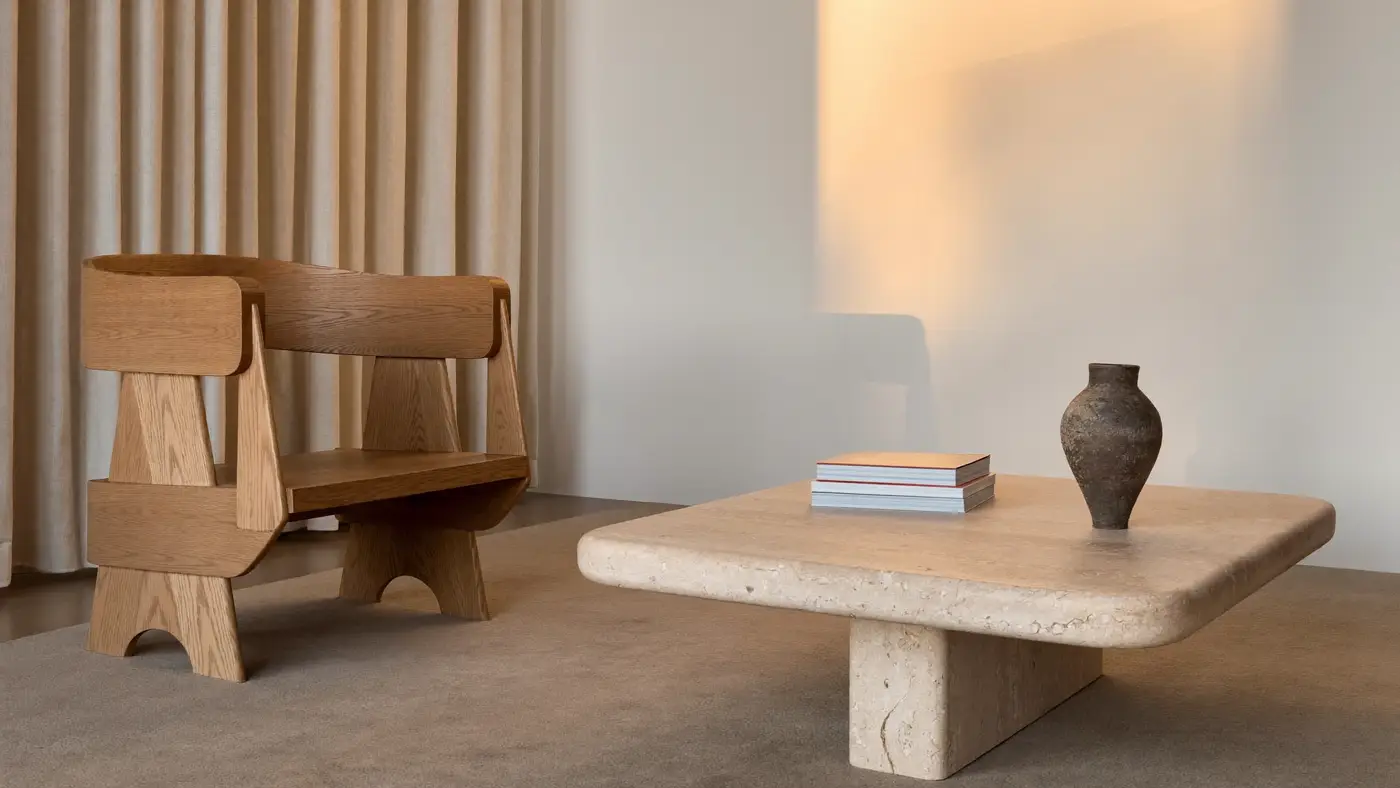
A chair is a chair until it is placed in a room someone wants to live in. People buy the feeling of the room, the morning light, the way a table makes Sunday lunch feel. Brands that understand this sell a point of view on living. Brands that do not end up competing on discount codes.
In the brand strategy stage we decide what that point of view is. Is your brand about craft and slow making, about smart use of small spaces, about colour, about durability for families with dogs? The answer shapes the identity, the photography, the copy on a swing tag and the way your showroom staff describe a fabric. It also gives you a reason to say no to trends that do not fit.
Furniture photography and AI room scenes
Photography is the biggest single cost in most home brands’ marketing, and the hardest to get right. Every product needs a clean cut-out for listings, a detail shot that shows the joint or the weave, and a room scene that helps someone picture it at home. Multiply that by finishes and fabrics, and a modest range becomes thousands of images.
We plan shoots so each image has a job, then direct them with your team. Our Studio also makes AI room scenes and AI product photography, which helps when you need a sofa shown in twelve fabrics or a kitchen shown in a room that does not exist yet. We are careful with it:
- The product in an AI scene must match the real product in shape, proportion, colour and finish, checked against your samples.
- AI imagery is disclosed wherever platform rules, retailer rules or honest expectation require it.
- Key hero images and anything showing texture or scale up close are usually best shot for real, and we will tell you when.
Films matter too. A slow move through a room, a drawer closing softly, a lamp switched on at dusk. Our film and photography team cuts each one in vertical, square and widescreen from the start.
Catalogues people keep
A good home catalogue is one of the few marketing pieces people keep on purpose. It sits on a coffee table for months and gets passed to a partner with pages folded down. That makes it worth designing properly: a clear structure by room or collection, honest product information, dimensions and materials where people expect them, and enough beautiful pages that it feels like a magazine rather than a price list.
We design catalogues for print and as digital editions that link straight to product pages, so the folded-down page becomes an order rather than a lost note.
How many months does your customer take to decide, and what do you send her meanwhile?
Tell us about your rangeShowrooms going digital, and long consideration
Many home brands built their reputation in showrooms, where staff could explain a fabric and customers could sit down. Now most people arrive having already looked online, sometimes for weeks. Your website has to do much of the explaining the showroom used to do.
Our website design work for home brands focuses on the questions people ask over a long decision: will it fit, what does the fabric feel like, can I order a swatch, how long is delivery, what happens if it does not suit the room? We design product pages with dimensions shown against a person or a doorway, swatch requests that are easy to find, and room planners or configurators where they genuinely help. Saved lists and swatch orders become reasons to stay in touch, and our retention and lifecycle team plans what someone hears from you between first look and order. Our SEO and AI search work makes sure you are found when someone searches for an oak dining table that seats eight, not only for your brand name.
D2C and marketplaces for home brands
On a marketplace, your sideboard appears as a small square next to cheaper lookalikes. The listing has to show quality at that size: a clear silhouette, a close-up of the material, dimensions, a room scene and what arrives in the box. We design listing sets alongside your own site so the brand looks the same wherever someone meets it. Our e-commerce and D2C team then works on your own store, where the margin is better and the relationship is yours.
Trade, architect and designer audiences
Architects, interior designers and contract buyers read your brand very differently from homeowners. They want specification sheets, finish libraries, lead times, technical drawings and downloadable files, and they want them without a sales call. A trade audience that finds it easy to specify you will keep doing it.
We design trade portals, specification packs, presentation decks and material for trade shows, all in the same identity as your consumer brand but written for a professional reader. Our exhibitions and events team can carry that onto a stand at a design fair, and our media planning and buying reaches trade and consumer audiences on a flat fee, never a share of spend.
How we work with home and interiors brands
Category walk
Your showrooms, website, marketplace listings and competitors, seen through a customer’s eyes.
Point of view
What your brand believes about living well, and how that shows in every room scene.
Identity and imagery
Identity, photography direction, AI scene rules and catalogue structure.
Website and launch
Product pages, listings, trade material and a media plan, built for a long decision.
Home brands often overlap with smart home and appliances and with luxury gifting. You can see every sector we cover on our industries page.
The first call is free. Send us your current catalogue or lookbook, links to your website and two or three marketplace listings, a list of your best-selling products and a line on who buys them, homeowners, trade or both.