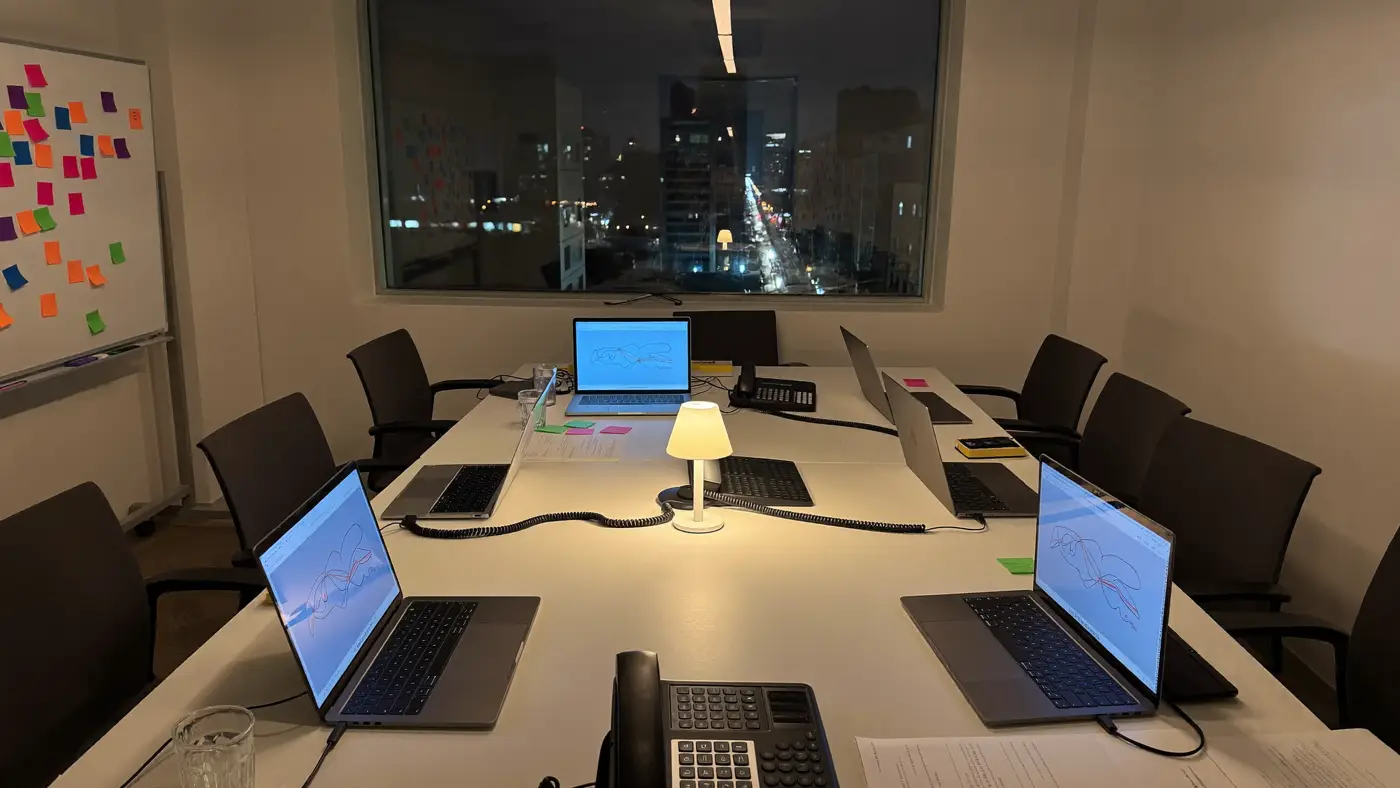

“If something went wrong tonight, who would write the first statement, and who would sign it off?” Most leadership teams cannot answer that question without a pause, and the pause is the problem. When a product recall, a data breach, a factory accident or a viral complaint lands at eleven at night, the hours that follow are spent finding phone numbers, arguing about wording and waiting for the one person who can approve anything. Meanwhile the story is being written by someone else.
We help companies get ready for that night long before it arrives. The work is mostly quiet: thinking through what could happen, deciding who speaks and who approves, writing the first words in advance and practising until the plan feels routine. When an incident does come, you are working from a page you already know, with people who already know your business.
What crisis communications can and cannot do
Let us be clear about the boundaries, because a crisis is the worst time to discover them.
- We do not give legal advice. Your lawyers decide what can and cannot be said, especially where liability, regulators or litigation are involved. We work alongside them, turn their position into language people understand and make sure the legal view and the human view arrive together.
- We cannot stop coverage. No honest adviser can promise that a story will not run. What good preparation does is make sure your side is accurate, available early and consistent across every channel, so the coverage that does appear is fairer and shorter.
- We do not replace your decisions. The board and the leadership team own the response. We make sure they have the options, the drafts and the facts in front of them when they need to decide.
Inside those boundaries there is a great deal we can do, and most of it is best done on an ordinary Tuesday.
Risk mapping: which incidents are actually likely?
Every company has a short list of things that keep its leaders awake, and a longer list of things nobody has thought about yet. We build both lists with you through interviews with operations, quality, IT, human resources, legal and the people who answer customer complaints. A plant manager knows which process worries her. A service lead knows which complaint keeps coming back.
Each risk is scored on how likely it is and how much damage it could do to trust, then given an owner. The result is a single map that tells you where to spend preparation time first. For a manufacturer it might be a product safety issue and an industrial accident. For a software company it might be an outage and a data breach. For a consumer brand it might be a contamination scare and a social media pile-on.
Playbooks, holding statements and approval chains
For each priority scenario we write a playbook short enough to use under pressure. It sets out who is told in the first hour, who gathers the facts, who speaks, which audiences hear what and in which order: employees, customers, partners, regulators, media, the wider public.
Every playbook carries pre-drafted holding statements. These are the short, factual first messages that buy you time without saying anything you will have to take back: what you know, what you are doing, when you will say more. Your lawyers review them in calm conditions, which is far easier than reviewing them at midnight.
The approval chain matters as much as the words. We agree who can approve what, who deputises when someone is on a flight, and how long each step may take. A statement that needs six signatures and has no time limit is a statement that will go out too late.
This sits inside your wider corporate communications, so the voice you use in a crisis is recognisably the same company that writes your annual report and your press releases.
Could your team publish a first statement within the hour?
Start with a readiness reviewSpokesperson training, over video
The person who speaks in a crisis is often a chief executive, a plant head or a technical director who has never faced a hostile interview. We train them remotely, over video, which happens to be how many crisis interviews and press briefings now take place anyway.
Sessions use your real scenarios. We play the journalist who interrupts, the customer who is angry for good reason, the employee who asks the question nobody wants to answer. We record, review and repeat. The aim is a spokesperson who stays calm, admits what they do not yet know and says the important thing in the first thirty seconds. Our leadership communications team often carries this on afterwards for everyday interviews and town halls.
Dark sites, monitoring and the channels you will need
When something happens, people go looking. A dark site is a set of pre-built web pages, kept unpublished, that can go live quickly with updates, a contact route and answers to the obvious questions. Our website team builds it inside your existing site or on a separate subdomain, tests that the right people can publish it, and works with our search team so it can be found when people search your name alongside the incident.
We also help you set up social and media monitoring: which tools you use, which terms and accounts to watch, who looks at the alerts and what level of noise triggers a call. Often the earliest sign of trouble is a complaint that keeps being shared, and someone needs to be watching for it.
Finally, we prepare the channel list: employee messaging, customer email, partner contacts, social accounts, the newsroom and the media list our PR and media relations team maintains. Each one has an owner and a tested login.
Simulations: practising until it feels ordinary
A plan nobody has rehearsed is a theory. We run simulations over video with your crisis team, feeding in a scenario as it unfolds: a first report, a journalist’s email, a leaked photo, a regulator’s call. People make real decisions against the clock. Afterwards we go through what slowed things down and fix the playbook.
Readiness review
Interviews and a look at what already exists: policies, contacts, past incidents.
Risk map
Likely incidents ranked, with an owner for each.
Playbooks and statements
Scenario guides, holding statements and approval chains, reviewed with your lawyers.
People and channels
Spokesperson training, the dark site and monitoring set up and tested.
Simulation and upkeep
Drills, fixes and regular updates as the business changes.
After an incident: the review nobody wants to do
Once things calm down, the instinct is to move on. We run a short post-incident review instead: what happened, how quickly each step moved, which messages landed and which did not, what employees and customers are still asking. The findings go straight back into the playbooks. Where trust needs rebuilding over months, that becomes part of your ongoing communications plan.
Why readiness works best on a retainer
Preparation goes stale. People change jobs, products launch, a new market opens, a phone number stops working. Our main offer is a readiness retainer for a flat fee agreed per scope: we keep the playbooks and statements current, run drills on an agreed cadence and stay familiar enough with your business that we are useful from the first minute if something happens. The level of incident support and how quickly we respond are agreed in the contract, so nobody is guessing on the night. See how we charge.
Our co-founder Karuna Waghmare leads corporate communication at Quiamo, so crisis readiness is planned by the same people who shape your everyday corporate voice. The first call is free.
What to send us: a short note on your business and where you operate, the two or three incidents you worry about most, any existing crisis plan or policy (however old), and the names of the people who would need to be in the room. That is enough for us to propose a readiness review.